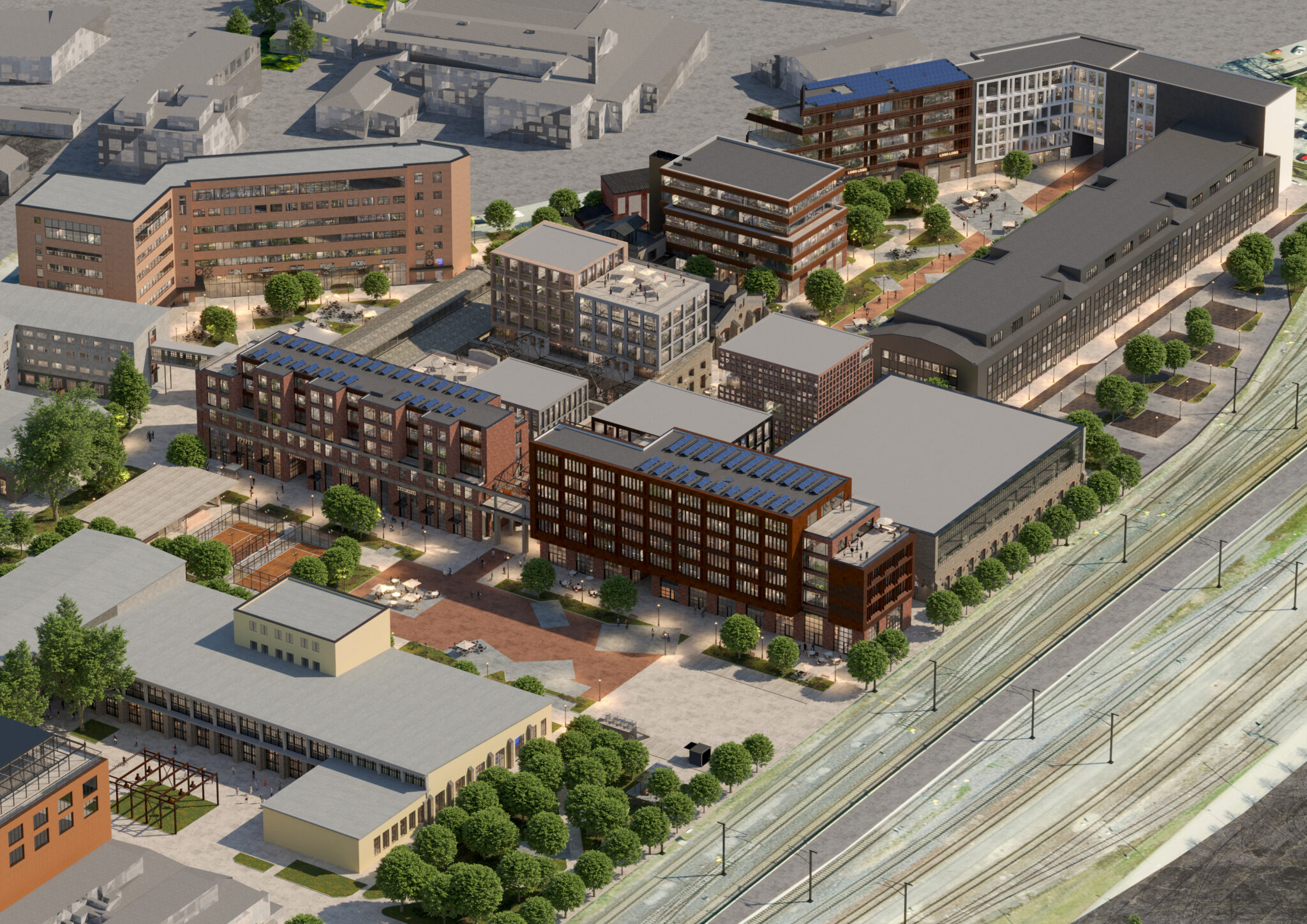
 Telliskivi TLN-i ärilinnakus algab linnaku suurima arenduse, M-hoone ehitus. Ligikaudu 20 000 ruutmeetri suurune multifunktsionaalne kompleks valmib 2028. aasta jooksul ning toob Telliskivisse uued bürood, Inbanki peakontori, urban spaa, rahvusvaheliste näituste ruumid ning kultuuri-, spordi- ja teenindusvõimalused.
P&E Real Estate kinnisvaraettevõtete gruppi kuuluv Telliskivi TLN sõlmis M-hoone ehituslepingu konsortsiumipartnerite Ehitusfirma Rand & Tuulberg AS-i ja Tallinna Ehitustrust OÜ-ga. Ehitustööd hõlmavad aadressil Telliskivi 60/3 asuva ajaloolise tööstuskompleksi renoveerimist ja uute hoonemahtude rajamist. Tööd viiakse ellu ühe tervikliku etapina, kompleksi valmimine on kavandatud 2028. aastasse.
„M-hoone arendusega astub Telliskivi ärilinnak järgmisesse väga olulisse etappi. Arendus seob piirkonna tööstuspärandi kaasaegsete töökohtade, kultuuri, heaolu, spordi ja lisanduvate uute teenustega. Telliskivi saab juurde aktiivset linnaruumi, mis töötab hommikust õhtuni ning pakub põhjuse tulla siia nii tööle, kohtuma, kultuuri nautima kui ka aega veetma,“ ütles P&E Real Estate juhatuse liige Priit Seeman. „Projekti oleme ette valmistanud pikalt, kujundades M-hoone ja viimastel aastatel valminud hooned ja pargialad ühtseks tervikuks. Lisanduvast üüripinnast oluline osa on tulevaste rentnikega kaetud, ülejäänud üüripinnad plaanime järk-järgult komplekteerida järgneva kahe aasta jooksul lähtudes Telliskivi pikaajalisest visioonist. M-hoone asub Telliskivi aktiivse piirkonna keskpunktis ja annab täiendava panuse Telliskivi atraktiivsusesse sihtkohana.“
Ehitaja Rand ja Tuulberg AS-i juhatuse liige ja arendusjuht Joonas Matteuse sõnul on M-hoone näol tegemist mastaapse ja märgilise ettevõtmisega. „Rajame hoonete kompleksi kesklinnas, Telliskivis, mis kujuneb järjest enam Tallinna omaette südameks. Töö käib keset elavat linnaruumi ja on kõigile nähtaval, mistõttu teeme endast kõik, et kompleks valmiks plaanide kohaselt ja ümbruskonna igapäev saaks rahulikult edasi kulgeda. Meil on hea meel seda teha koos Ehitustrust OÜ-ga. Oleme ka varem suuri ja keerukaid projekte koos ellu viinud ning teame, et saame teineteisele kindlad olla.“
Telliskivi TLN finantseerijateks on Swedbank AS ja OP Corporate Bank plc Eesti filiaal, sündikaatlaenuga summas 70 miljonit eurot finantseeritakse M-hoone ehitust ja refinantseeritakse olemasolev pangalaen.
„Telliskivi TLN-i areng näitab, mida on võimalik saavutada siis, kui tugeva kontseptsiooni taga on selge visioon ja järjepidev teostus. Swedbank on sellesse kontseptsiooni uskunud algusest peale ja olnud arenduse finantseerimispartner kogu selle kujunemise teekonnal. Suured ja pika vaatega arendused sünnivad tugevas koostöös. Meil on hea meel jätkata pikaajalist koostööd P&E Capitaliga ning rahastada seda projekti koos uue partneri OP Pangaga, kellega jagame usku selle arenduse pikaajalisse mõjusse,“ kommenteeris tehingut Swedbanki korporatiivpanganduse osakonnajuht Mihkel Utt.
OP Corporate Bank Eesti müügijuht Marek Jõgi lisab, et M-hoone on hea näide arendusest, kus pikaajaline visioon, ettevõtte arenguvajadused ja linnaruumi kujundamine moodustavad terviku. „OP jaoks on oluline olla partner ettevõtetele, kelle investeeringud loovad pikaajalist väärtust nii nende äritegevusele kui ka ümbritsevale keskkonnale,“ märkis Jõgi.
M-hoone ehitus moodustab Telliskivi TLN-i pikaajalise arendusplaani viimase suure etapi. Möödunud aastatel on linnakus valminud K-hoone ja Telliskivi Park ning renoveeritud ajaloolised G- ja I4-hooned. M-hoone valmimisega suunatakse Telliskivi linnaku igapäevane autoliiklus valdavas enamuses maa alla ning laiendatakse oluliselt tänavapinda jäävat vabaajaveetmise ruumi – kogu alast kujuneb inimesekeskne terviklik äri-, kultuuri- ja vaba aja linnak.
M-hoone maapealne osa koosneb kaheksast omavahel seotud hooneosast. Ligikaudu pool arenduse üüripinnast moodustavad A-klassi bürood. Ülejäänud pindadele lisanduvad spaa, näitused, sport, kultuur, meelelahutus, toitlustus, kaubandus ja heaoluteenused. Kompleksi juurde rajatakse ka uus parkimismaja koos maa-aluse parkimiskorrusega.
Ühte seitsmekorruselisse hooneosasse kolib 2028. aastal Inbanki peakontor. Linnakusse kavandatud urban spaa hõlmab ligikaudu 2000 ruutmeetrit. Uues kompleksis valmivad ka püsivad ja tehniliselt kõrgetasemelised näitusepinnad, mis võimaldavad korraldada Telliskivis senisest suurema nõudlikkusega rahvusvahelisi kunsti- ja elamusnäitusi.
Arendusega viiakse lõpule Telliskivi TLN-i väljaehitamine
M-hoone paikneb endise Balti Raudtee peatehase ajaloolisel alal. Telliskivi tööstusajalugu ulatub 1870. aastasse, mil piirkonda rajati Revali raudtee peatöökojad. Tehase peahoone ja seda ümbritsenud tootmisala kujundasid aastakümnete jooksul Tallinna tööstuse arengut ning andsid tööd sadadele inimestele.
M-hoone arhitektuurne lahendus lähtub piirkonna tööstuslikust iseloomust ning seob ajaloolise keskkonna uute hoonemahtude, avaliku ruumi, jalakäijate liikumisteede ja rohealadega. Arendus tugevdab Telliskivi ühendust Balti jaama, Reisijate tänava, Kalamaja, Pelgulinna ja Tallinna kesklinnaga.
M-hoone põhinäitajad
- aadressil Telliskivi 60/3, Tallinn;
- ligikaudu 20 000 m² üüripinda (kokku koos olemasoleva linnakuga 46 000 m2 üüripinda);
- pärast arendust valmib kaheksa omavahel seotud hoonemahtu M1–M8;
- ligikaudu pool pindadest A-klassi bürood;
- 2000 m² urban spaa;
- Inbanki peakontor seitsmekorruselises M2-hoones;
- kultuuri-, näituse-, spordi-, meelelahutus-, toitlustus- ja teeninduspinnad;
- uus parkimismaja;
- ehituse algus august 2026;
- valmimine 2028. aastal






 Telliskivi TLN-i ärilinnakus algab linnaku seni suurima arenduse, M-hoone, ehitus. Ligikaudu 20 000-ruutmeetri suurune kompleks valmib 2028. aastal ning selle ehitust finantseerivad 70 miljoni euro suuruse sündikaatlaenuga Swedbank ja OP Corporate Bank Eesti filiaal.
 Kodulaen on pikaajaline finantskohustus, mistõttu on panga jaoks otsustava tähtsusega kliendi maksevõime ja tööalane taust. Üha enam levivat eksiarvamust, et laenu pole mõtet enne katseaja läbimist taotleda selgitab Luminori kodulaenude valdkonna arendusjuht Margit Volt.
 Hepsor AS (registry code 12099216, address Järvevena tee 7b, 10112, Tallinn, Estonia; Hepsor) announces the public offering of the second series of Bonds (Offering) under its EUR 20 million bond programme (Programme). Through the Offering, Hepsor will raise up to EUR 3 million with an option to increase the volume to up to EUR 5 million. The Offering will be conducted on the basis of the base prospectus (Prospectus) prepared by Hepsor and approved by the Estonian Financial Supervision Authority (EFSA) on 10 November 2025, and the prospectus supplement (Prospectus Supplement) approved on 21 August 2026, which have been published as of the date of this notice on the websites of Hepsor and EFSA. The Offering is addressed to retail and institutional investors in Estonia, Latvia and Lithuania.
 KV.EE
KV.EE 
 Summus Capital jätkas 2026. aasta teises kvartalis laienemist, omandades Park Krakowi büroohoonete kompleksi. Kontserni konsolideeritud müügitulu ja varade maht jõudsid kõigi aegade kõrgeimale tasemele.
 Tartu Ringkonnakohus leidis kohtumääruses, et reformimata riigimaad ei saa igamise teel omandada ka juhul, kui inimene või tema eelkäijad on kinnisasjal asuvat ehitist vallanud aastakümneid.
 Üürikinnisvara võib olla hea investeering, kuid halvasti koostatud üürileping, puudulik üleandmisakt või teadmatus üürisuhtega seotud õigustest ja kohustustest võib kaasa tuua võlgnevusi, vaidlusi ja rahalisi kahjusid. Koolitus „




 Eesti elamispindade müügipakkumiste keskmise hinna liikumist peegeldav

 Pärnus sõlmiti esimesel poolaastal eelmise aasta sama perioodiga võrreldes pea kolmandiku võrra rohkem uusi kodulaenulepinguid, selgub värskest Bigbanki laenuportfelli analüüsist.
 Eesti Panga avaldatud statistika näitab, et tagatisega eluasemelaenude keskmine intressimäär kerkis tänavu II kvartalis 3,93 protsendini, samas kui tarbimislaenude intressimäär langes aastases võrdluses 0,53 protsendipunkti võrra. SEB eraklientide panganduse divisjoni juhi Sille Hallangu sõnul on vaatamata kasvavale intressikeskkonnale laenamine eraisikutele taskukohane ning turg aktiivne.