


 Market activity was slightly lower than in recent quarters, but remains relatively high
- Housing affordability will gradually decline this year as borrowing costs increase
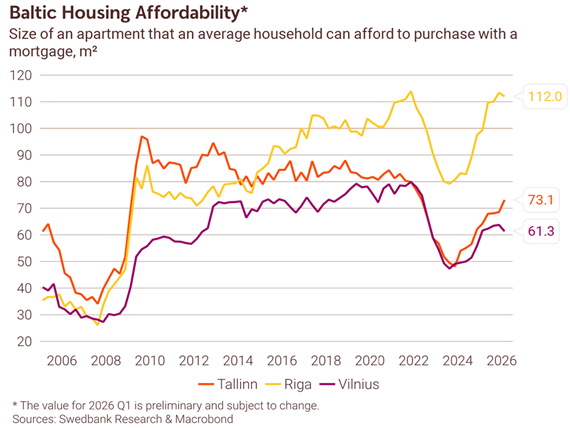
The housing affordability story among Baltic capitals varies. The recent reform in personal income tax in Estonia had a material impact on household net incomes in Tallinn, pushing affordability in the first quarter of 2026 higher compared with both the end of 2025 and a year ago. In Vilnius, booming housing demand has led to double-digit apartment price growth that is outpacing wage growth, causing affordability to fall below 2025 levels. In between these stories lies Riga, with comparatively weaker wage growth that did not manage to exceed apartment-price growth over the preceding quarter, leading to a slight decline in affordability.
Despite these diverging developments across capitals, the broader outlook is becoming less favourable for housing affordability. In our latest Swedbank Economic Outlook, we forecast two rate hikes from the European Central Bank (ECB), while the markets are currently pricing in 3 hikes. This will increase borrowing costs, though not to the extent seen during the previous monetary-tightening cycle. Furthermore, this tightening is expected to be short-lived, with rates forecast to decline again in 2027. Weaker economic prospects and higher inflation are likely to weigh on consumer confidence. All things considered, housing affordability in Riga and Vilnius likely peaked in late 2025, while in Tallinn the peak is expected to occur in the first half of this year.