Kinnisvarakool: Kinnisvarakooli suveakadeemia 2026 - Tõnu Toompark
Kinnisvarakool: Planeerimis-ehitusvaldkonna spetsialisti täiendõppeprogramm
Kinnisvarakool: Kinnisvaramaakleri stardiprogramm
 

Kommentaar euribori ja intressimäära kohta

Kinnisvaraturg on täna üsna aktiivne ja laenusid väljastatakse üksjagu. Paljus on selle taga eelmisel aastal võlaõiguslikult ostetud arendusjärgus korterid, mis täna asjaõiguslepinguteni ja seega maa-ameti statistikasse jõuavad.

Seega on tänane laenuralli pigem tingitud eelmise aasta positiivsest meelsusest, kui tänasest madalast euriborist.

Madal laenu hind kindlasti ärgitab inimesi laenuvõtmisele mõtlema, aktiivseimaid ka tegudeni jõudma. Intressimääral on siiski enamasti kaks komponenti – muutuv euribor ja muutumatu riskimarginaal. Viimane on tõusnud aastataguselt 1,6-1,8% pealt tänaseks 2,0% suurusjärku.

Euribor on intressimarginaali tõusust siiski kiiremini alanenud ja seetõttu on kokkuvõtlik laendamine inimeste jaoks odavamaks läinud. Seda näitab ka Eesti Panga laenustatistika, mis ütleb, et maikuine uute eluasemelaenude keskmine intressimäär oli 2,96% – nii madal ei ole see mitte kunagi olnud.

Ajaliselt ettepoole vaadates prognoositakse, et euribor püsib madalal tasemel veel aasta-paar. Küll peab laenuvõtja arvestama, et euribor ei jää alla ühe protsendi 25-30 aastaks ehk kogu laenuperioodi kestel. Seetõttu tuleb laenuvõtjal tõsiselt kaaluda, kas ta tuleb laenumaksetega toime ka euribori tõusmisel näiteks 4 protsendini, mis 2,5% intressimarginaali puhul teeb summaarseks intressimääraks 6,5%.

Kinnisvarakool & koolitus: planeerimisseaduse ja ehitusseadustiku muudtaused

Statistics: Residential Space In Estonia Has Increased 0.4 Per Cent Y-o-Y

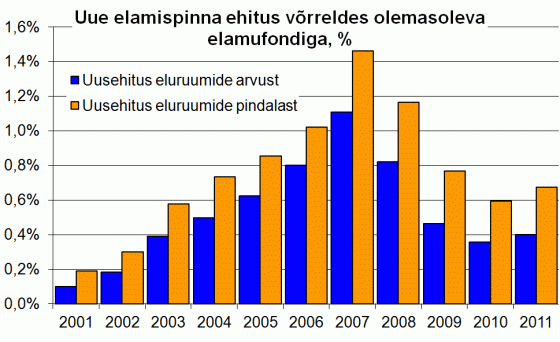
Citing figures from the Estonain statistics office, Tõnu Toompark has reported on his Adaur blog that the total number of newly constructed residential units compared with the existing housing stock has increased by 0.4 per cent y-o-y, to 2012. The actual area of residential space versus existing stock increased by 0.68 per cent over the same period.

These may not seem like huge figures, but we are talking about increases as compared with the existing stock of course; the figures for the ‘boom’ years were much higher, with an approximately 1.1 per cent increase in numbers of units compared with stock in the peak year of 2007 (and over 1.4 per cent when measuring new developments by area) and at no point during the slump did the figures actually move into negative numbers.

That said, a one per cent increase in new housing over existing stock is required to account for depreciation in that existing housing, according to Tõnu. The magic one per cent figure will allow the maintaining of the quality of housing, or indeed an improvement through refurbishments and renovation work, Tõnu explains.

However, at best, there are only three years so far where that has happened, at least when going on area of residential stock (rather than numbers of units) namely 2007 as we have noted, and the two years either side of that. Thus in general there has been a deterioration in the overall quality of the housing stock over the last few years, when applying this rule, Tõnu notes.

That said, the situation is markedly better than was the case prior to the boom; 10 years ago in 2002 the number of new units compared with housing stock had only risen by 0.18 per cent y-o-y and the figure for area of new residential space had only increased by 0.3 per cent on the existing stock, writes Tõnu.

The original article (in Estonian) is here including a graph of y-o-y figures for ratio of new residential developments (by number and by area) to total stock.

It will be interesting to see if the mini-boom in construction which is taking place at present, and likely to be accompanied with a growth in commercial construction due to a dearth in good office space, will contribute to pushing the ratio of new housing to existing stock closer to the desired one per cent mark.

Tallinn Property by Goodson & RedAndrew Whyte
Tallinn Property by Goodson & Red

Aastaga lisandus 409 maja müügipakkumist

Eesti elamispindade pakkumishinna liikumisi jälgiv KV.EE indeks on langenud 60,7 punktile. Ühe kuu tagusest ajast on see 0,66% madalamal. Aastaga on indeks langenud 0,98%.

Indeksi liikumised on napid – nii nagu juba viimase kahe aasta jooksul. See näitab, et kinnisvarapakkumisepool ehk müüjad ei ole enda ootusi oluliselt tõstnud. Kasvanud tehinguhinnad on liikunud pakkumishindadele lähemale. Selle tulemusena on elamispindade turg olnud viimaste kvartalite jooksul üsnagi aktiivne.

Vaadates kitsamalt portaali KV.EE majade pakkumisi, siis näeme, et nende pakkumishinnad on Eestis tervikuna püsinud aastatagusel tasemel. Pakkumishinnad on kasvanud suuremates turu piirkondades Harjumaal, Tartumaal ja Pärnumaal vastavalt 2, 6 ja 1%. Kaheksas maakonnas on pakkumiste hinnad aastatagusest madalamal.

Majade pakkumiste arv on kasvanud kõikides maakondadeks. Erandiks on siin Viljandi ja Lääne-Viru maakonnad, kus pakkumisi on aastaga vähemaks jäänud vastavalt 24 ja 6%.

Kogu Eestis on aastaga lisandunud 409 majapakkumist, mis kasvunumbriks teeb 8%. Selle tulemusena oli juunis 2012 portaalis KV.EE 5654 maja müügipakkumist.

Vaata lähemalt, mis toimub kinnisvaraturul portaalist KV.EE.

Majade müügipakkumiste arv ja selle muutus Majade müügipakkumiste hind ja selle muutus
Maakond 06/2011 06/2012 Muutus, % 06/2011 06/2012 Muutus, %
Eesti 5 245 5 654 8% 797 798 0%
Harjumaa 2 959 3 021 2% 947 962 2%
Hiiumaa NA NA
Ida-Virumaa 115 142 23% 513 510 -1%
Jõgevamaa 66 81 23% 373 318 -15%
Järvamaa 64 84 31% 464 340 -27%
Läänemaa 76 120 58% 756 670 -11%
Lääne-Virumaa 162 152 -6% 548 570 4%
Põlvamaa 15 NA 320 439 37%
Pärnumaa 617 708 15% 642 648 1%
Raplamaa 138 165 20% 543 565 4%
Saaremaa 55 67 22% 802 788 -2%
Tartumaa 635 757 19% 685 723 6%
Valgamaa 109 117 7% 476 432 -9%
Viljandimaa 210 160 -24% 482 480 0%
Võrumaa 39 65 67% 483 380 -21%


KV.EE indeks

Kinnisvarakool: Planeerimis-ehitusvaldkonna spetsialisti täiendõppeprogramm

Ten Top Tips When Buying Residential Property In Tallinn And Estonia

In amongst all the up-to-date news and developments about the real estate market, and everything else in Tallinn and Estonia, we like to provide concrete advice to those who are thinking of buying in Tallinn. After all, property is our passion so we ought to give vent to that now and again!

To that end, here’s some advice on buying here, which we’ll provide free, ‘cos we’re like that. We might even cover the dos and don’ts of letting out property here soon as well so watch this space. Even if you have already invested here, you will find some useful tips to help you navigate the small but thriving real estate market here.

We have taken the perspective of a potential overseas investment buyer in Estonia (i.e. buy-to-let) but the following is largely also applicable to those who are thinking of buying a part-time (such as holiday home or pied à terre in Tallinn) or indeed full-time dwelling in Estonia.

Please note that this post is for information only and should not be taken as legal or financial advice. Please contact a legal or financial professional for that! (We can help get you in touch). This information is provided free of charge and, whilst we strive for accuracy in all things, Tallinn Property and Goodson & Red accepts no responsibility for any loss or other misfortune arising after acting upon this advice.

That said, we are confident that the information provides an accurate consumer-eye picture of the residential real estate climate in Tallinn and strongly advise you to bear it in mind, especially since there is unlikely to be any similar information avaiable in English, so read on..

1) Find a reliable partner who will protect the buyer’s (i.e. your!) interests. The best indicator is a good friend, acquaintance, a positive experience or a recommendation from someone in the know here. If you are not sure then visit at least a couple of estate agents/brokers to get a better idea of different work cultures and strengths.

Some of the agents here in Tallinn are large and well established, including Uusmaa and 1Partner, which have a large volume of items, a big staff, offer a range of services and have plenty of knowhow (Uusmaa was founded in 1993 not long after Estonia became independent, and is nationwide).

Some other bigger agencies in Estonia to think about include Pindi-EriArco VaraDTZ (which is not so strong in Tallinn) and Domus.

Bigger is not necessarily better of course, and there are a plethora of smaller and middle-sized agents in Tallinn and Estonia in general (at least 300 across the country). The range and quality of services will vary, however, and it is important to understand that the estate agent sector is not so heavily regulated as it is in, say, the UK. Some agents, particularly the bigger ones, are heavily sales-driven; the very small outfits may simply be an individual registered as a company to market a couple of properties belonging to themselves or friends and relatives. In general not all agents are experts in dealing with overseas investors and focus more on the domestic market so it is important to establish their credentials here too.

2) Unless you speak Estonian it is naturally important to find an agency conversant in a language which you understand. Most of the bigger agents, indeed most professional-aged people, will speak English, and most agents will speak Russian too. It’s not hard to find Finnish speakers here either, and not unheard of for agencies who have staff conversant in German, Swedish, Spanish or Italian either.

Most of the bigger agencies will have websites in two to three of these languages (usually English is one of them, although not all of the material in Estonian is necessarily translated) and often each individual agent will list the languages he/she can speak.

3) Be sure of the current market situation. The market is relatively transparent compared with some other areas of the CEE zone; one useful source is the two big real estate portals here, www.kv.ee and www.city24.com. These hold most of the properties that are on the market in Estonia (city24 also covers Poland, Sweden, Finland, Lithuania and Latvia) are searchable (in English) by region of Estonia, district (in the case of Tallinn) number of rooms, size, price and many other variables. Listings usually come with multiple, good quality photos although you should of course visit a property in person before buying; the agent who is acting for the property will be listed. Of course some properties will be listed with multiple agents.

Please note that just because a property is listed on kv.ee or city24.ee it doesn’t mean that the asking price is necessarily going to be reasonable, and be sure to look at the date the advert commenced. If a property has been up for more than a few months it is likely there are some issues either with price or something else. At the time of writing the average price per square metre for property in Tallin was a little over 1 000 Euros/square metre, rising to around 1 800 Euros/Square metre in central Tallinn (usually somewhat more than that in the Old Town itself, with Toompea being generally the most prestigious part of the already-prestigious Old Town) and the sought-after residential district of Pirita.

The figure for the whole of Estonia was 700 Euros/Square metre at the time of writing although there are naturally regional variations, with Tartu and the resort town of Pärnu, for example, being more expensive than the towns in the eastern-most parts of the country.

A bewildering array of statistics is published every month by one of the big hitters, Pindi-Eri, although the catch is it’s all in Estonian. This includes figures for average prices, sizes, number of owners etc. for all areas of Estonia going back many years (transparency, remember!). Some more comprehensive information is available on real estate expert Tõnu Toompark’s adaur blog (again usually in Estonian) together with Goodson & Red’s quarterly Market Review (and this IS available in English!) plus of course this blog.

4) When you have found an agent, obtain from this real estate partner an accurate picture of the service they provide and the fees they charge buyers for their services. It is normal for buyer’s agents to charge something. This shouldn’t be much more than a two to three per cent commission, or a fixed fee plus commission, or purely a fixed fee, but it varies by agent and also type of property.

It would often work in the buyer’s advantage to go for a fixed fee, since with a commission, it is not in the agent’s interest to get a lower price since they would be losing out on commission in so doing. At the same time this fixed fee might be split between an initial sum and a ‘bonus’ sum payable on completion of sale. A ballpark figure fixed fee would be a around 1 000 to 2 000 Euros for the initial fee. The bonus will often be pegged to the value of the property and could be anything from around 500 Euros for a small property to 3 000 or so for a high end property. In any case the fixed fee should equate to a commission of around two to three per cent, without the disincentive noted above.

Beware of agents who promote a ‘discount’ on their fixed fee or commission if the selling price is reduced by a certain amount from the asking; this could encourage the buying agent to collude with the seller to set the initial asking price higher than it is worth to give the impression of obtaining a good price. Thankfully such practices in Tallinn are now the exception rather than the norm and not something which larger, reputable agents would be likely to fall into, but as an overseas national it is important to exercise due care and obtain the advice and assistance of a local acquaintance where possible, even simply for language issues. On the plus side, Estonians are quite flexible, if you see a property you like but the buyer’s fee structure doesn’t quite work for you, always speak up and ask how this can be negotiated.

5) Become acquainted with all factors relating to the buying process. These include notarized contract forms, state orders of magnitude, notary fees etc. In general this is quite a straightforward affair in comparison with the UK for example, and it is not necessary to hire a lawyer or obtain a full survey unless you wish to.

Ask the partner to identify local laws related to real estate acquisition / possession / management. Depending on where you are from, there may be restrictions to buying property (if you are an EU citizen for example, there are not). Also be sure to check whether your country of origin has a double taxation agreement with Estonia; if it does not, you are not liable for taxation on rental income in your own country.

In general if you on the ground in Tallinn or Estonia it is possible to view a property in person in exactly the same way you would do in the UK or US, though you can usually (not always) expect a refreshing lack of hard-sell or ‘estate agent-ese’ in comparison. Making an offer can be done verbally although this does not make it legally binding; the seller might come back with a counter offer, although note that some sellers have little leeway in the negotiation process (due to many people borrowing during the boom time at a large loan to value rate at higher price levels than today). Naturally you should have an idea based on point 3) above plus your own reasearch as to whether you are getting a good deal even at the asking price, and there are some bargains around.*

6) Explore all options for finance. If you are able to borrow from Estonian banks (for instance an EU citizen should be able to) it is worth investigating because they are offering low rates even by present-day standards (as low as three per cent). The real estate portals kv.ee and city24.ee noted in point 3) above carry mortgage calculators which can give the monthly payments due on a property. Banks are much more stringent in their terms than the boom period of course, and 100 per cent loan to value mortgages are a thing of the past, though that is likely to be the case everywhere. In any case the mortgage application process in Estonia is quite straighforward and decisions are usually made quite quickly. If you are based in another country it may be possible to use your income there to determine how much you can borrow; with Estonian real wages still comparatively low by EU standards you may find you can borrow much more than a local Estonian could, however it is a good idea to exercise restraint and not overstretch yourself.

7) When considering buying an investment property, do think about the type of property you are investing in. Is it likely to be suitable for a student, foreign national or young professional(s)? How old is the building? What are communal areas like? Are there likely to be any planning permission issues? Is there much storage? Is there a parking space? A garden? What are the communal charges? Is it located near to public transport links, retail outlets and other facilities? Again, your agent will be able to advise you on this.

8) Location, location, location. Something of a cliché but true nevertheless. Experience shows that the best chance of investing in a successful rental property falls within the central part of Tallinn. This incorporates the old town, the ‘Kesklinn’ (city centre) and to a certain extent the areas of Kadriorg and Kristiine, to the east and west of the centre respectively, so you should really confine your search to these areas of Tallinn. Also worth considering are areas which are “up and coming”, most notably the waterfront from the harbour westward to the Kalamaja district, fast becoming the bohemian quarter of Tallinn with restaurants, cafes as well as residential developments sprining up, and still within walking distance of the centre; your broker will be able to advise you on the current landscape.

We are not saying that properties outside this zone are necessarily going to be untenable, but the distant location together with type of property (which tends to veer between either Soviet era apartment blocks or older wooden houses which would tend to suit local families, to larger, detached houses with large gardens which would be difficult to let out and manage) make it unlikely. Outside of Tallinn the scope is somewhat more limited for investment property, but your agent will be able to advise you nevertheless.

9) When buying a newly-refurbished apartment, do not assume that the kitchen, and even the bathroom, will be fully installed. Often you will have to by the fittings separately and get them installed, so be clear as to what is and is not included in the price and the time-frame within which the property will be ready for habitation.

10) When employing the services of workmen be sure to get recommendations from your agent or other contacts that you may have in the country. Self-explanatory really, but please note that due to economic factors many of the country’s best construction workers, craftsmen, carpenters, plumbers etc. are out of the country at any given time, sometimes only on a temporary basis but often (particularly in Finland) semi-permanently at least. For this reason it is crucial you get recommendations. On the other hand don’t let this put you off any property which you see as having potential but which needs work; part of Estonia’s economic recovery at the time of writing lies in a mini-construction boom, with rising prices in construction materials ensuring that there are people willing and able to work in this field.


*Please note that the above info does not include the case of foreclosed properties, which are generally in the possession of the banks and are often being auctioned off. Having said that much of the excess here has already been taken up and it is difficult to find bargains today, not to mention the fact that there might be issues regarding existing tenants or former owners still inhabiting the dwelling. For this reason we do not recommend inexperienced investors in this region intentionally pursuing this route.

Tallinn Property by Goodson & RedAndrew Whyte
Tallinn Property by Goodson & Red

Kinnisvarakool & koolitus: Varjatud puudused – kinnisvaramaakleri ja müüja vastutus kinnisvaratehingutes

Statistika: eluruume lisandus aastatagusega võrreldes 0,4%

Statistikaameti andmetel moodustas  2012. aastal eluruumide uusehitus 0,40% kogu eluruumide arvust. Eluruumide pindalast moodustas uute kasutusloa saanud eluruumide arv 0,68%.

Nõutav eluruumide taastootmine, mis kataks ära elamufondi amortiseerumise on 1% elamufondist. 1-protsendiline eluruumide uusehitus võtaks arvesse, et eluruumide kvaliteeti saab hoida ja tõusta ka läbi remondi ja renoveerimise.

Nii peame tõdema, et eluruumide madal uusehituse tase viib meid aeglase, kuid siiski järjepideva elamufondi keskmise kvaliteedi halvenemiseni.

Positiivne on siin see, et näiteks kümne aasta tagusest ajast on olukord märksa parem. Siis lisandus eluruume kõigest 0,18% eluruumide arvust ja 0,30% eluruumide pindalast.

Uue elamispinna ehitus võrreldes olemasoleva elamufondiga

Uue elamispinna ehitus võrreldes olemasoleva elamufondiga

Tõnu Toompark on Adaur Grupp OÜ ja Kinnisvarakool OÜ juhatuse liige ning Eesti Kinnisvarafirmade Liidu (EKFL) juhatuse liige.

Adaur Grupp OÜ

Kinnisvarakool

Eesti Kinnisvarafirmade Liit

Kinnisvarakool & koolitus: Kinnisvaraturu ülevaade - Tõnu Toompark

Estonian Finance Ministry Building In Tallinn To Be Demolished, Rebuilt

According to a report by Ott Tammik on the English language site of the Estonian Public Broadcasters (ERR) the building which houses the Estonian Finance Ministry is to be demolished and two new, identical towers are to be built in its stead.

The current building at Suur-Ameerika 1, which was constructed back in 1977 when Estonia was a constitutent republic of the former USSR, has been declared unfit for renovation (which was the original intention) according to the report.

The work is due to start some time in 2013 and whilst the new buildings, which will also house the Ministry of The Economy, the Ministry of the Interior and the Ministry of Social Affairs from 2016, are to resemble the existing building externally, the interior will comprise modern, open plan offices rather than separate office rooms as is currently the case, according to the report.

This has not been met with unified approval, it would seem. The Estonian Architect’s Union called the building an architecturally valuable monument to its era and the decision to demolish it ‘strange’, the report stated.

Possible interim accomodation for the Finance Ministry during the period of construction could be the current Tax and Customs’ Board (EMTA) offices in various locations around Tallinn. EMTA is due to relocate to new premises in Ülemiste in the second half 2013.

Tallinn Property by Goodson & RedAndrew Whyte
Tallinn Property by Goodson & Red

Kinnisvarakool: Kinnisvaramaakleri stardiprogramm

Ober-Haus: Baltikumi hinnaindeks 06/2012

Ober-HausTallinnas tõusis juunis võrreldes maiga keskmine korteri ruutmeetri hind 0,2%, 1108-le eurole. Võrreldes eelmise aasta juuniga oli käesoleva aasta juunis Tallinna keskmine korteri pinnaühiku hind 7,5% kõrgem.Käesoleva aasta esimesel poolaastal on turg olnud aktiivne, korterite ostu-müügitehinguid tehti 31% rohkem kui eelmisel aastal samal perioodil.

Riias tõusis keskmine ruutmeetri hind juunis 0,3% 988-le eurole ruutmeetri kohta. Kõige aktiivsemad välismaalastest kliendid on Venemaalt ja teistest SRÜ riikidest. Viimase 12 kuuga on keskmine ruutmeetri hind tõusnud 4,9%. Võrreldes hindade tipuga 2007-l aasta mais on aga hinnad keskmiselt 57,5% madalamad.

Vilniuses võrreldes maiga hinnamuuutust ei toimunud, keskmine ruutmeetri hind oli sama – 1196 eurot. Aasta alguse suured tehingute kasvunumbrid on nüüd langusele pöördunud. Viimase aastaga on keskmine ruutmeetri hind Vilniuses langenud 1.0% 1196-le eurole.

Lae alla: Ober-Hausi Balti riikide korterite hinnaindeks juuni 2012

Kinnisvarakool & koolitus: Kinnisvaraarenduse praktikum – ideest teostuseni

Uus Maa juunikuu turuülevaade

Ilmunud on Uus Maa juunikuu turuülevaade.

Mõned märksõnad ülevaatest:

  • Eesti kinnisvaraturul tõusis tehingute hulk aastaga 10,5%.
  • Tallinna uusarenduste suur populaarsus on kinnisvaraturule toonud ka spekulante, kes on eelkõige huvitatud 2-toalistest korteritest uutes majades.
  • Rakvere kinnisvaraturg oli juunis aktiivne – oma osa andsid selleks võõrsil tööl käivad inimesed, kes soovisid raha kinnisvarasse paigutada.

Ülevaate saad alla laadida siit.

Kinnisvarakool & koolitus: Pärimine – mida peab teadma pärimismenetlusest - Evi Hindpere

Analüütik: vähesed saavad lubada 2000-eurose ruutmeetrihinnaga korterit Kadriorus

Puitasumitest on Kadriorg vaieldamatult kõige prestiižikam, kuid sealset kuni 2000 euroni ruutmeetri kohta ulatuvat ruutmeetrihinda suudavad vähesed endale lubada, kirjutab Adaur Grupi kinnisvaraanalüütik Tõnu Toompark.

Kadrioru fenomen Kalamaja või näiteks Pelgulinnaga on see, et Kadriorus paikneb üksjagu uuemaid hooneid, mis hinnad üles veavad. Kalamaja ja Pelgulinna hoonestus on seevastu valdavalt vanematest hoonetest koosnev.

Pelgulinna korterite keskmine tehinguhind on suurusjärgus 1000 eurot ruutmeter, Kalamajas 1400 eurot ruutmeeter.

Kalamaja on viimasel ajal võiks isegi öelda – ülipopulaarne. Kant on ilus ja asumile on tekkinud oma fännklubi.

Pelgulinn on «uus Kalamaja ». See on sobilik neile, kes tahaksid elada Kalamaja laadses asumis, kuid kel hinnapiir Kalamajja kolimist ei võimalda.

Kalamaja eelis on ehk randa kerkiv kultuurikompleks. Pelgulinna elanikud ei jää merest samuti ilma, kuid nemad peavad leppima ainult suplemisvõimalusega Stroomi rannas.

Toimetas: Enn Tosso, suvereporter
http://www.e24.ee/905542/analuutik-vahesed-saavad-lubada-2000-eurose-ruutmeetrihinnaga-korterit-kadriorus/

Kinnisvarakool & koolitus: Varjatud puudused kinnisvaratehingutes: ostja õigused, müüja kohustused ja müügigarantii praktikas

Estonian Exports Down Y-o-Y To May 2012, Nevertheless Growing

A recent report on the Estonian Statistics Office site has stated that May 2012 saw a decrease in exports y-o-y of some eight per cent at current prices.

This needs to be seen in the context of May 2011′s figures being at a record high however, according to the report.

Meanwhile, imports remained steady and thus there was a much larger trade deficit (five times higher – at 113 million Euros) than in May 2011. In all, Estonian imports in May 2012 came to 1.1 billion Euros and exports at 1 billion Euros.

Nonetheless the general month by month trend has been for an increase in exports, which have increased every month since the end of 2011, with the exception of April (imports have followed the same pattern), the report stated.

This is particularly relevant since much of Estonia’s economic recovery has been export-driven.

As regards export sectors, machinery and equipment accounted for the largest share (30 per cent) and also saw a y-o-y increase in exports of 11 per cent. Mineral fuels had the next highest share of the export pie at 12% and metals and metal products taking 10 per cent of the share, according to the statistics. Nonetheless mineral fuels saw a contraction export in May 2012 when compared wih May 2011 (of 52 per cent) and it is this phenomenon primarily which accounts for the y-o-y decrease in total exports.

Machinery and equipment constituted the largest share of imports (28%), followed by mineral fuels (15%) and agricultural products and food preparations (10%). As with exports, mineral fuels also saw a y-o-y decline in May 2012, of 17 per cent. Machinery and equipment saw a y-o-y increase however (5 per cent) and chemical industry raw materials and bi-products saw a 13 per cent y-o-y rise in imports, the report stated.

The most important destinations for Estonian exports were Finland and Sweden at 16 per cent of exports each, and Russia at 12 per cent, according to the report.

Estonia’s main trading partners for imports remained Finland at 14 per cent primarily for electrical equipment and fuels, Russia (fuels, timber and timber products, and an 11 per cent share of imports) and Germany (transport equipment and electrcial equipment – also accounting for 11 per cent of all imports), the report stated.

The original report (in English) with a breakdown of sectors and main trading partners is here.

Tallinn Property by Goodson & RedAndrew Whyte
Tallinn Property by Goodson & Red

Kinnisvarakool & koolitus: kuidas korteriühistus võlglastega hakkama saada

Tallinn-Tartu-Pärnu: korteriturg näitab tugevat tehingute arvu kasvu

Tänane elamispindade turg näitab tugevaid numbreid eelkõige tehingute arvu osas. Tehingute arvu kõrval kasvab ka tehingute hind. Positiivne on, et tehinguhinna kasv on tagasihoidlik, ega söö liiga kiirelt tarbijate ostujõudu.

Mööda ei saa minna maailmamajandusest. Lõuna-Euroopas toimuv ei luba teha liiga pikki plaane ja sunnib kohalike elama üks päeva korraga.

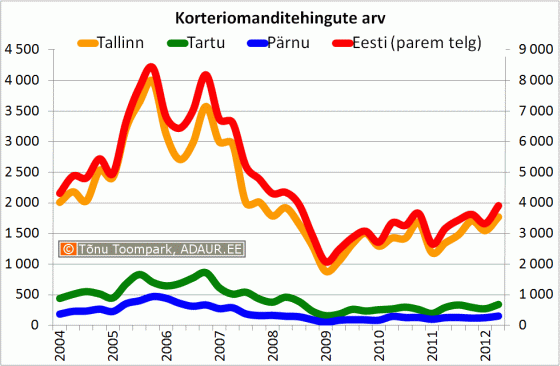
Korteriomanditehingute arv

Korteriomanditehingute arv

2012. a. II kvartal näitas korteritehingute arvu osas tugevat numbrit. Kindlasti on suur osa tehingute arvus sellel, et valmima on hakanud arendusprojektid, mille ehituse ja müügiga alustatid 9-12 kuud tagasi.

Täna jõuavad need arendusprojektid asjaõiguslepingute sõlmimise faasi. Viimased kajastuvad ka maa-ameti statistikas.

Arvestades, et eelmise aasta teine pool oli uute projektide osas esimesest märksa tagasihoidlikum, võib arvata, et tehingute arv on käesoleva aasta teises pooles tänaselt tasemelt allapoole tulemas.

Kogu Eestis tehti 2012. a. II kvartalis korteritehinguid 3903 ja Tallinnas 1770.

Tartus sõlmiti korteritega tehinguid 341, Pärnus 155.

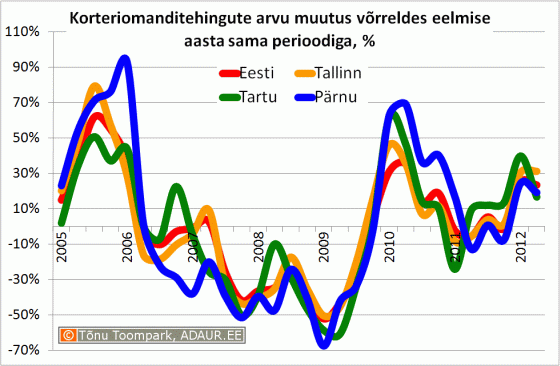
Korteriomanditehingute arvu muutus võrreldes eelmise aasta sama perioodiga, %

Korteriomanditehingute arvu muutus võrreldes eelmise aasta sama perioodiga, %

Võrreldes eelmise aastaga näitas korteritehingute arv tugevat tõusu.

2012. a. I kvartali kõrged tõusunumbrid olid eelmisel aastal saabunud euro ja sellest tingitud kinnisvaraturu ajutise seisaku tõttu eksitavad.

2011. a. II kvartaliks olukord kinnisvaraturul klaarus. Seega on tänased tõusunumbrid igati asjakohased.

Eestis tehti käesoleva aasta II kvartalis 23% rohkem korteritehinguid, kui möödunud aasta II kvartalis. Tallinna tõusunumber oli 31%.

Tartus tuli aastaga tehinguid juurde 17 ja Pärnus 19%.

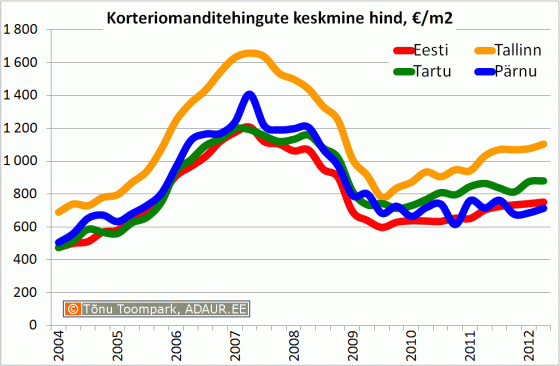
Korteriomanditehingute keskmine hind, €/m2

Korteriomanditehingute keskmine hind, €/m2

Korterite hinnad “suurlinnades” liiguvad tõususuunas. Tallinna keskmine korteritehingu hind ületas viimase 3,5 aasta jooksul taas esimest korda 1100 euro piiri.

Samal tasemel (ja tegelikult isegi kõrgemal tasemel) olid hinnad viimati 2008. a. viimases kvartalis ja enne seda 2005. a. viimases kvartalis.

Nii on korterite tehinguhinnad täna samas suurusjärgus, mis need olid ka 7 aastat tagasi.

Tartu hinnatasemeks 2012. a. II kvartalis oli 880 €/m2 ja Pärnus 714 €/m2.

Eesti keskmine korteritehingu hind oli 2012. a. II kvartalis 751 /m2.

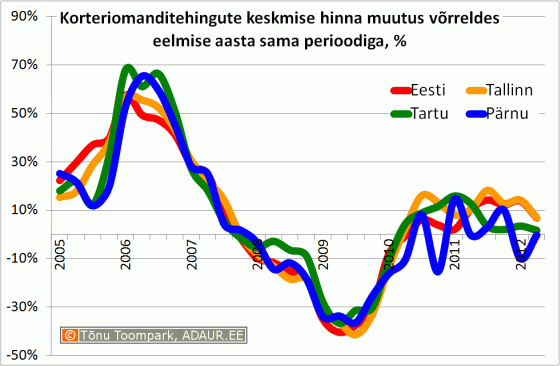
Korteriomanditehingute keskmise hinna muutus võrreldes eelmise aasta sama perioodiga, %

Korteriomanditehingute keskmise hinna muutus võrreldes eelmise aasta sama perioodiga, %

Kõrge tehingute arv ei ole samakõrgele kasvule viinud korteritehingute hinda.

Positiivne on see, et tehingute hinnatase kerkib. Samuti on positiivne see, et hinnatõus ei ole liiga kiire.

Liiga kiire ehk 10% ületav hinnatõus kärbib tarbijate ostujõudu kinnisvara soetamisel ning mõjub turu tehinguaktiivsusele pärssivalt.

Eesti korteritehingute keskmine hind on eelkõige Tallinna tehingute najal aastatagusest 7% kõrgemal. Sama palju on hinnatase kerkinud ka pealinnas.

Tartu aastane korteritehingute hinnatõus on 2%.

Pärnus oli aga 2012. a. keskmine korteritehing isegi 0,2% aastatagusest odavam.

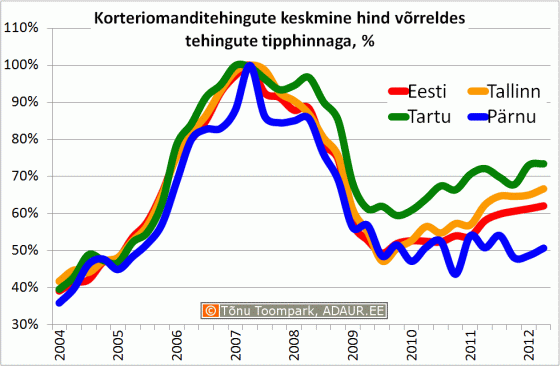
Korteriomanditehingute keskmine hind võrreldes tehingute tipphinnaga, %

Korteriomanditehingute keskmine hind võrreldes tehingute tipphinnaga, %

Eesti korterite tipphinnad oli 2007. a. II kvartalis. Tänaseks oleme sellest tasemest allpool kõikide kinnisvara liikide ja asukohtade lõikes.

Arvestama aga peame, et võrreldes 2007. a. esimese poolega on üldist hinnataset tõstnud inflatsioon. Teisisõnu on tänane 1000 eurot märksa vähem väärt, kui veel viis aastat tagasi kinnisvarahindade tipus.

Tallinna korterite tehingute hinnatase on tipust allpool kolmandiku võrra.  Tartu korterid aga 27%.

Pärnu korterid olid kas buumi ajal kõige rohkem ülehinnatud või pole täna kuidagi uut hoogu sisse saanud. Tõenäoliselt on tõetera mõlemas eelnevas väites. Pärnu korterite hinnatase on buumi tipust 49% allpool.

Eesti korterite keskmine tehinguhind on tipphindadest allpool 38%.

Viimane number tähendab taas, et hinnatõus puudutab ennekõike Tallinnat-Tartut. Muudes piirkondades on hinnatase võrreldes kunagiste tippudega endiselt üsna madalal.

Kokkuvõtteks

Kõrge korteritehingute arv on majanduse üldist seisukorda arvestades isegi pisut üllatav. Osa tehingnute arvu kasvust on tingitud uute korterite müükide vormistamistest, kuid isegi ilma nendeta ei saaks me rääkida tehingute arvu langusest.

Tehingute arvu kasvuga käsikäes on kasvanud eluasemelaenude mahud. Seda soodustab osalt madal euribor ja kõikide aegade madalusrekordeid purustav euribor.

Lähema kvartali-kahe perspektiivis võiks oodata mõningast tehingute arvu kokkutõmbumist. Seda eelkige uute korteritega tehtavate asjaõiguslepingute vähenemise tõttu.

Kui uute korteritega tehakse vähem tehinguid, siis poleks sugugi imekspandav, kui pisut langeb ka tehingute hind. Kinnisvara väärtuse langust siiski ootama ei peaks – kui muidugi arengud Lõuna-Euroopas seda endaga kaasa ei kutsu.

Maailmamajanduse määramatus on tegur, mis tänasel kinnisvaraturul sunnib elama põhimõttel “üks päev korraga”. Turg pakub häist ostu- ja müügivõimalusi, iseasi on need üles leida ning lisaks leida eneses julgus tehinguni minna.

Kinnisvarakool: Üüriinvesteeringute finantsanalüüs - Tõnu Toompark

Tallinna äripindade üüripakkumiste arv vähenes aastaga 11%

Portaali KV.EE andmetel on Tallinna äripindade üüripakkumiste arv aastaga vähenenud 11%. Kui aasta tagasi oli pealinnas üüripakkumisi 4098, siis käesoleva aasta juuniks oli pakkumisi 3632.

Üüripakkumisyt hind on sama aja jooksul kasvanud 3,4%. Käesoleva aasta juunikuiste äripindade keskmine üüripakkumishind oli 6,10 €/m².

41% üüripakkumistest ehk 1482 asub Tallinna kesklinnas. Suurem on äripindade pakkumine Mustamäel ja Lasnamäel, kus asub vastavalt 644 ja 450 üüripakkumist.

Protsentuaalselt on kõige enam äripindade üüripakkumiste aastane vähenemine olnud Haaberstis ja Nõmmel (-35%) ja vanalinnas (-30%). Ainsana on aastatagusega võrreldes suurenenud äripindade pakkumine Kristiine linnaosas, kus pakkumisi lisandus aastaga 18 ehk 6%.

Vaata lähemalt, mis toimub kinnisvaraturul portaalist KV.EE.

Äripindade üüripakkumiste arv ja selle muutus, tk
06/2011 06/2012 Muutus, %
Haabersti 113 73 -35%
Kesklinn 1 594 1 482 -7%
Kristiine 291 309 6%
Lasnamäe 570 450 -21%
Mustamäe 649 644 -1%
Nõmme 173 113 -35%
Pirita 35 30 -14%
P-Tallinn 262 257 -2%
Vanalinn 184 129 -30%
Tallinn 4 098 3 632 -11%
Narva 27 23 -15%
Pärnu 247 265 7%
Tartu 422 630 49%
Eesti 5 230 4 971 -5%


Äripindade üüripakkumiste arvu muutus Tallinnas portaalis KV.EE

Kinnisvarakool & koolitus: Kinnisvara müük praktikas – strateegiast tehinguni

Statistics: Volume Of Residential Space In Tallinn Has Increased 0.29 Per Cent Y-o-Y

The volume of residential space in Estonia, according to data from the Estonian Statistics Office, stood at 657 800 items with a total area of 40.53 million square metres, as reported by Tõnu Toompark on his adaur blog.

This represents an increase in the number of residential items of 0.29 per cent y-o-y, and an increase in area of residential space of 0.52 per cent, writes Tõnu.

A typical residential property according to the data will be around 30.3 square metres in area; 10 years ago it stood at 27.5 square metres, Tõnu continues.

There are currently 491 residential units per 1 000 people in Estonia, or 2.04 people per unit. In 2002 that figure stood at 457 units per 1 000 people or 2.19 people per unit, Tõnu continues.

The original article (in Estonian) with diagrams showing changes in numbers of residential units and total living space area, plus changes in average living space area and number of residential units per 1 000 inhabitants, is available here.

Tallinn Property by Goodson & RedAndrew Whyte
Tallinn Property by Goodson & Red

Kinnisvarakool: Planeerimis-ehitusvaldkonna spetsialisti täiendõppeprogramm

Statistika: Eluruumide arv kasvas aastaga 0,29%

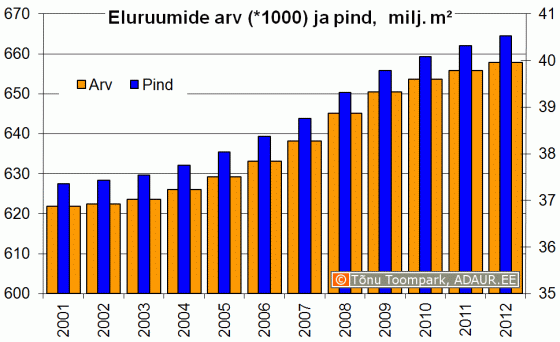
Eesti eluruumide arv kasvas statistikaameti andmetel 2012. a. alguseks 657 800 eluruumini kogupindalaga 40,53 miljonit ruutmeetrit.

Aastaga suurenes eluruumide arv 0,29 ja eluruumide pindala 0,52 protsenti.

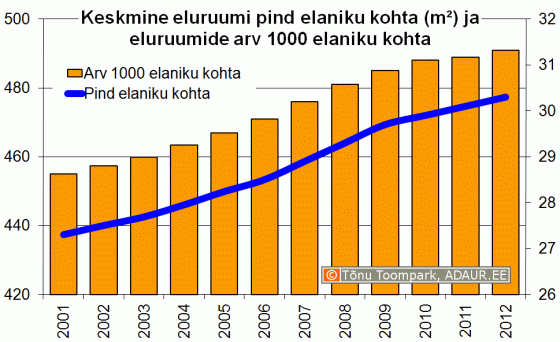
Ühe Eesti elaniku kohta on rahvaloenduse esialgseid andmeid mittearvestades 30,3 ruutmeetrit elamispinda. 10 aastat tagasi oli see näitaja 27,5 m2.

1000 elaniku kohta on Eestis 491 eluruumi ehk teisipidi elab ühes eluruumis 2,04 inimest. 10 aastat tagasi 2002. aastal elas ühes eluruumis 2,19 inimest ja 1000 inimese kohta oli 457 eluruumi.

Eluruumide arv (*1000) ja pind (miljon m2)

Eluruumide arv (*1000) ja pind (miljon m2)

Keskmine eluruumi pind elaniku kohta (m2) ja eluruumide arv 1000 elaniku kohta

Keskmine eluruumi pind elaniku kohta (m2) ja eluruumide arv 1000 elaniku kohta

Tõnu Toompark on Adaur Grupp OÜ ja Kinnisvarakool OÜ juhatuse liige ning Eesti Kinnisvarafirmade Liidu (EKFL) juhatuse liige.

Adaur Grupp OÜ

Kinnisvarakool

Eesti Kinnisvarafirmade Liit

Kinnisvarakool & koolitus: Kinnisvaraarenduse praktikum – ideest teostuseni

Estonian Zero Rate Corporate Tax On Retained Earnings Admired In Finland

According to a report by Kristopher Rikken on the English language site of the Estonian Public Broadcasting authority (ERR), certain aspects of Estonia’s corporate tax regime have impressed people on the other side of the Gulf of Finland.

In fact, Jyri Häkämies, Minister for Economic Affairs in Finland, stated in an interview with Turun Sanomat, a local newspaper in Turku in the West of Finland, that he would aim to bring the proposal of abolishing corporate tax on retained earrnings, as per the Estonian model, to the table at a cabinet meeting.

The argument in favour of such a move is that it would enourage companies to reinvest their profits rather than withdraw them.

Karl Stadigh, CEO of Sampo Bank in Finland, has gone a step further and said that cuts in taxes on some dividends should also be introduced, the report stated.

Dividends are taxed in Finland at a rate of 24.5 per cent.

Arguments against zero corporate taxation on retained earnings include the fact that companies have less incentive to withdraw funds in order to start new companies.

The original report is available here.

Tallinn Property by Goodson & RedAndrew Whyte
Tallinn Property by Goodson & Red

Kinnisvarakool & koolitus: Ehitamise dokumenteerimine praktikas – kuidas vältida vaidlusi, järelevalve märkusi ja probleeme objekti üleandmisel?