


 Market activity was slower over the year, yet still close to or above the long-term average
- Housing affordability will primarily depend on wage-price dynamics, as interest rates are not expected to materially increase further this year
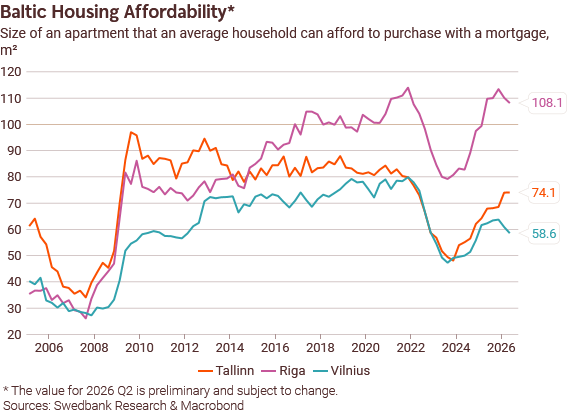
Each Baltic capital faced similar factors in the second quarter as in the first months of 2026. In Tallinn, net wage growth exceeded apartment price growth due to a significant boost from the personal income tax reform. This kept housing affordability considerably higher than a year ago. Conversely, in Vilnius and now also in Riga, prices increased more rapidly than wages. Paired with an increase in interest rates, this has pushed affordability below last year’s levels.
Market activity was at or above the long-term average, yet below last year’s exceptional performance. After adjusting for population size, activity was almost identical in Tallinn and Vilnius, with Riga landing slightly below that.
In a wider context, the outlook for housing affordability and market activity remains largely unchanged. Geopolitical uncertainty has persisted, somewhat affecting consumer confidence. As expected, the European Central Bank (ECB) raised its key interest rates by 25 basis points in June. Swedbank forecasts one more hike this September. Mortgage interest rates have already priced in the remaining rate hike and EURIBOR has increased only marginally in the third quarter so far. As a result, unless new shocks to the inflation outlook emerge, the negative drag of higher interest rates on housing affordability is not likely to materially increase in the coming quarters.