


 The strong wage increase in the third quarter is good news for a working person. Increasing employment and average wages, on the other hand, are a bit mystifying against stagnant corporate income and near-zero growth in the third quarter.
Upward wage developments continue
According to wage statistics, published on Thursday, the average wage reached EUR 1045 in the third quarter. It means that compared to the same time last year, the average pay increase was as much as 7%. As low energy prices have forced the Estonian economy into deflation, real salaries that take account of price impact, have grown even more – by 7.5%.
In terms of the areas of activity, as a percentage the wage increase was highest in several relatively low-wage sectors. The fastest growth was in the accommodation and catering sector where the average wage grew by an astounding 17%. As this is a sector to employ lots of people that officially earn only minimum wage, the factor behind the growth may be the increase in the minimum wage; however, the intensified activities of the Tax Board might also have had an impact. Wage increase was also apace in the art and entertainment segment (12%) and in real estate activities (11%). Two sectors, whose wages are mostly shaped by the central government – education and healthcare – were significant contributors to the general wage increase. While the average salaries of educators grew by 10%, for healthcare workers the growth was 8%. In the past few years, wage increases for teachers has been an especially clear political priority that is now finally materialising. Healthcare workers, on the other hand, are enjoying the fruits of earlier agreements.
The advancing shortage of labour puts pressure on wages to increase. The unemployment rate has now dropped close to 5% which means that free labour resources have essentially been depleted and new recruits come from people who are already otherwise engaged. But poaching implies a willingness to pay higher wages. In the light of near-zero economic growth, a question of another matter is: Why do companies feel the need for new recruits and how can they afford wage increase without creating more added value? As according to initial estimates, gross domestic product grew by just 0.5% in the third quarter, it could be expected that employers are cautious to increase labour costs. Therefore, based merely on the labour market indicators, it would seem that perhaps GDP growth was not that low and may be adjusted upwards after precise data is received.
Growth in deposits even slower in recent months
Although according to the surveys of the Institute of Economic Research, the population’s fear of unemployment has slightly grown throughout the year, the pace of saving for a rainy day has somewhat slowed down. The stable growth of 8% in private deposits over a prolonged period has in the past two months reduced a bit. In October, the savings of private individuals in banks increased by 6.7%. As retail turnovers have remained more at less at the same level in recent month, the decrease in funds sitting in bank accounts could imply that wage increases may have abated.
Nevertheless, the growth in deposits considerably exceeds that of loan volumes which for private individuals remains close to 3.5%. The total volume of home loans that accounts for a majority of private loans grew by 4% in recent months but the bulk of loans that were granted – by just 2%. Growth in new loans has even slowed down a bit which implies that the residential property market may be lagging a little.
Although corporate borrowing has been very volatile in the past months, it seems to have stepped up in the second half of the year. In the first half of 2015, corporate loan turnover decreased by 2% compared to the same period last year. In the second half of the year, loan turnover has surged upwards by 26% in the past four months compared to the same period last year. Increased lending might imply that corporate investments could be expected to improve slightly towards the end of the year. Breaking the loans down by their objectives, more loans have been taken out in recent months to expand business and also to finance commercial premises. As far as areas of activity are concerning, the processing industry has demonstrated solid results, as have wholesale and retail trade as well as the energy sector. Although the aggregate indicator of confidence has slightly deteriorated in the industrial sector, it is positive that the share of companies challenged by low demand has decreased.
Mihkel Nestor
Economic Analyst, SEB


 Tööstusettevõtted tootsid 2015. aasta oktoobris 2% vähem toodangut kui eelmise aasta oktoobris, teatab Statistikaamet. Toodang vähenes nii energeetikas ja mäetööstuses kui ka töötlevas tööstuses.



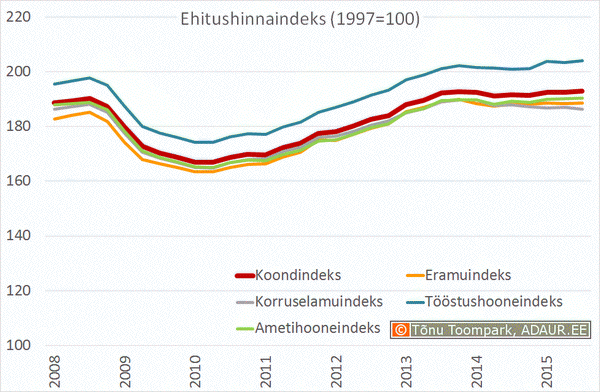
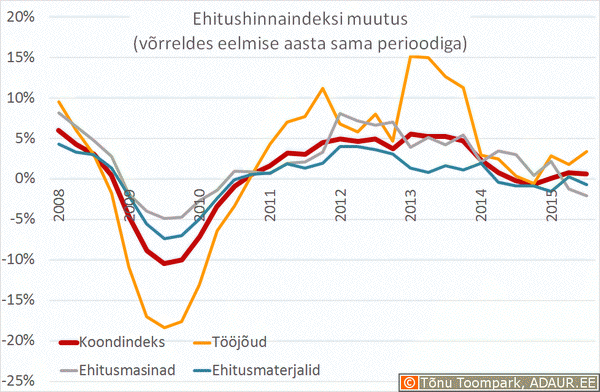
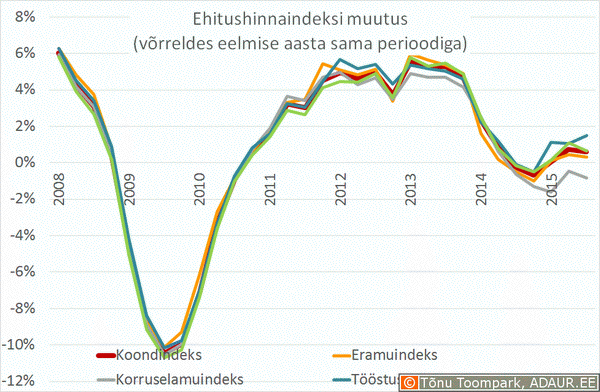
 Ehitushinna koondindeks kerkis statistikaameti andmetel 2015 III kvartali lõpuks 192,83 punktini. See on 0,16% eelmisest kvartalist ja 0,59% aastatagusest kõrgemalt.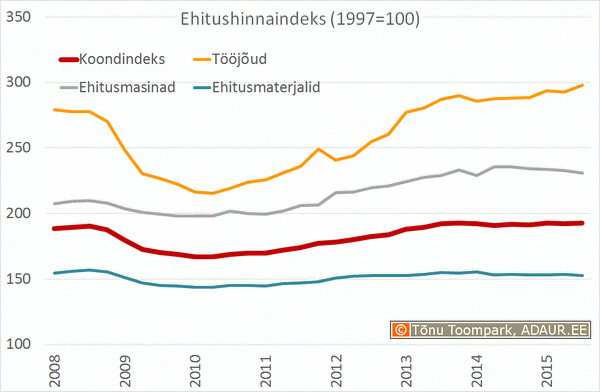




 Aastaga on oluliselt suurenenud alla 25-aastaste huvi kinnisvara ostmise vastu, selgus kinnisvaraportaali KV.EE poolt oktoobris läbi viidud uuringust. Samal ajal on noorte huvi üürimise vastu langenud.

 Kui ma ostsin korteri ja korteris oli üldgaas. Tegin remondi ja lasin Eesti Gaasil torud ära lõigata, kuna otsustasin elektripliidi kasuks.
 Tallinnas pakuti
 Täna pandi pidulikult nurgakivi Põhja-Tallinnas asuvale Arsenali keskusele. Erika ja Tööstuse tänava nurgal endise sõjatehase ruumides avab 2016. aasta sügisel uksed kaubandus- ja ärikeskus. Tsaariaegsetesse punastest tellistest tehasehoonetesse rajatava keskuse ehitusmaksumus on ligikaudu seitse miljonit eurot. Kaubanduskeskuse ehitab Nordecon AS.
 Tartu osaleb kogu Euroopas ainulaadses suurprojektis SmartEnCity, mis aitab osa Tartu kesklinna elamupiirkonnast muuta terviklikult nutikaks linnaosaks. Endisest 50-60ndatel ehitatud kortermajade piirkonnast saab tarkadel lahendustel toimiv ja energiasäästlik linnaosa.
 Tallinn kavandab projekti „Fassaadid korda“ raames toetuste andmise korda reguleeriva Linnavolikogu määruse muutmist, mis annab võimaluse toetada ka neid korteriühistuid, kes SA KredEx-i toetusele ei pretendeeri, kuid renoveerivad enda eluhooneid panga krediiti kasutades.
 Kuigi aeg-ajalt tõuseb päevakorda vanade paneelmajade lammutamise teema, ei saa seda nii kategooriliselt käsitleda, et võtame mõne magala tervenisti maha ja ehitame uued korterid asemele, kirjutab Arco Vara Tallinna esinduse elamispindade osakonna juht Agur Tammistu.
 Kiire palgakasvu jätkumine kolmandas kvartalis ei olnud üllatus, kuna seda näitasid juba maksuameti palgastatistika numbrid. Statistikaameti järgi ulatus täistööajale taandatud keskmine brutokuupalk kolmandas kvartalis 1045 euroni, kasvades aastaga umbes 7%. Maksu- ja tolliameti andmetel oli kolmanda kvartali palga mediaanväljamakse 733 eurot ehk 8% rohkem kui aasta tagasi. Statistikaameti ning maksu- ja tolliameti andmed palga väljamaksete kohta ei ole otseselt võrreldavad.